Service AllianceServiceAlliance
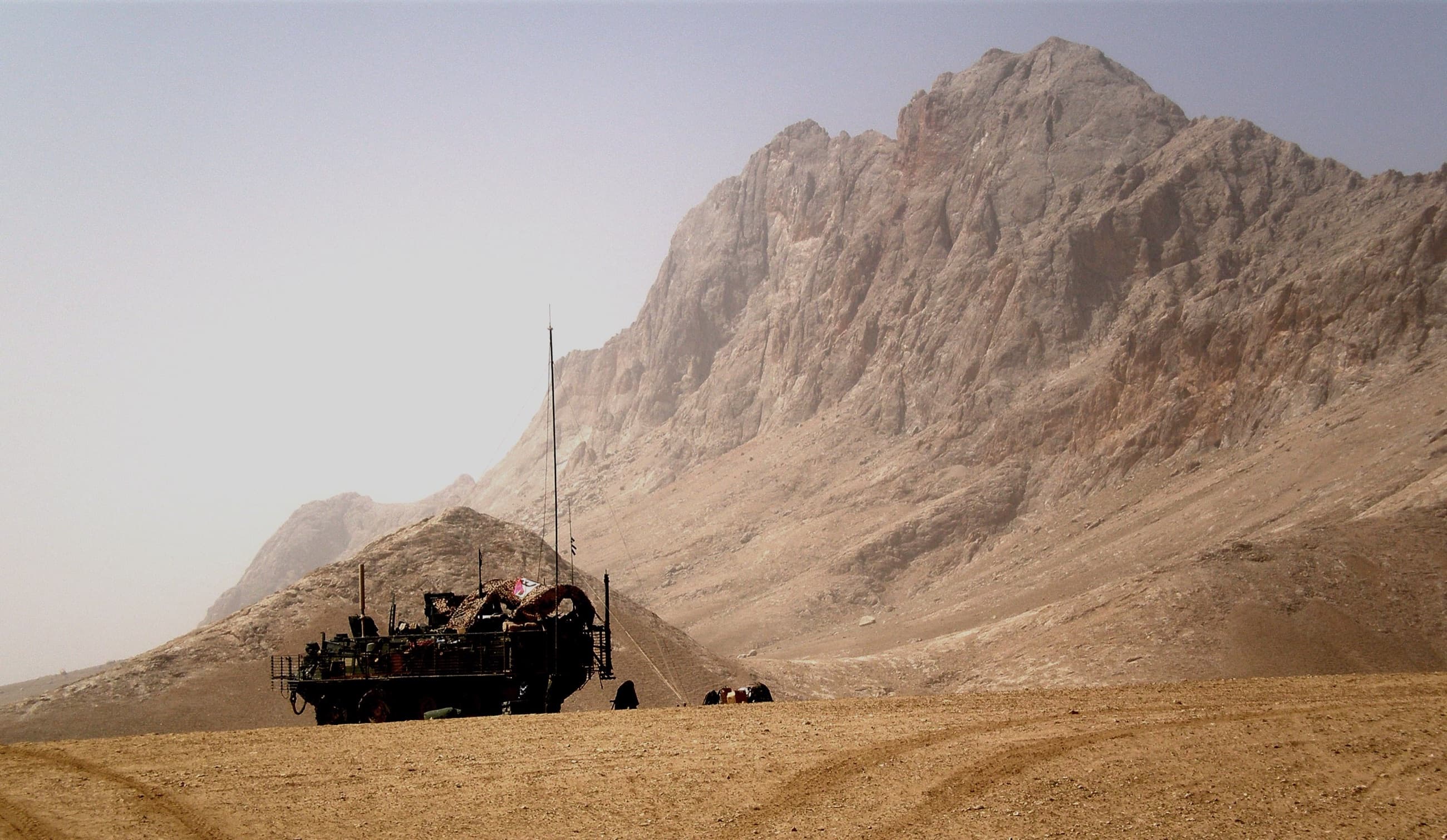
A U.S. Army Stryker on patrol across open desert beneath a towering Afghan ridgeline
🗺️Service Alliance · AI Tool 05 of 8 · The Military Domain
The Campaign

Walk the ground
where history was made.

An immersive ArcGIS-powered battlefield and campaign mapping platform — Revolutionary War to present. Trace your unit's path across 250 years of American military service.

Every engagement. Every movement. Every waypoint that mattered — rendered on the ground where it happened.

What The Campaign Provides

History isn't a textbook. It's terrain.

The Campaign is not a Wikipedia article with a pin. It is the Veteran-validated, ArcGIS-powered record of American military movement — built to make every campaign walkable.

🗺️

ArcGIS Battlefield Maps

Every major U.S. engagement from Lexington and Concord to present — rendered on accurate terrain, with unit positions, lines of advance, and hour-by-hour phase lines.

🎯

Unit Movement Overlays

Trace your unit's path through any campaign. Garrisons, deployments, reliefs-in-place, and combat movements — sourced from official records and cross-referenced to terrain.

📍

Personal Service Overlay

Layer your own deployments, duty stations, and assignments on top of your unit's historical route. Your service record, mapped against 250 years of lineage.

📜

Archival Document Integration

After-action reports, unit histories, oral testimonies, and photographs anchored to the exact geographic coordinates they describe.

✍️

Veteran Community Annotation

Veterans add ground-truth notes, photographs, and corrections directly to map layers. The historical record, corrected by the people who were there.

🎓

Educational & Heritage Mode

Curriculum packs for schools, museums, unit associations, and heritage organizations. Make cavalry history tangible for a generation that has never seen a guidon.

The Process

Three steps. Any campaign. Any era.

01

Select a Campaign

Choose any American military campaign — by era, branch, or unit. The Campaign loads the terrain, the order of battle, and the archival record for that engagement.

02

Overlay Your Service

Pull your unit lineage from LegacyLog. Your service history layers onto the terrain automatically — every duty station, every deployment, every phase line.

03

Contribute Ground Truth

Add your photographs, your after-action notes, your corrections. Your Veteran Voices oral history links to the exact coordinates you described.

⚔️Featured Case Study

190 years. One Regiment.
Every campaign that made America.

The 2d Cavalry Regiment is the oldest continuously serving cavalry regiment in the U.S. Army. Constituted on 23 May 1836 as the 2nd Regiment of Dragoons, it has fought in every major American conflict since — from the Florida swamps to the Mexican frontier, from Gettysburg to the Argonne, from Normandy to the Fulda Gap, from 73 Easting to the Stryker formations of today.

It is also the anchor unit behind the 2d Cavalry Association— the first and oldest Veteran organization in the United States established around a military unit, and the organization whose oral-history tradition directly inspired Service Alliance's Veteran Voices platform.

If The Campaign can render the 2d Cavalry's lineage end-to-end — archival sources, terrain, troopers, and testimony — it can render yours.

Open the 2d Cavalry Sub-Platform

Regimental calendar · searchable by day · 190 years of Dragoon history

2d Cavalry Regiment · Lineage & Honors

Ten waypoints. One continuous line.

Each waypoint below renders as a live ArcGIS layer in The Campaign — with archival sources, unit positions, and Veteran annotations anchored to the ground where it happened.

  1. 1836Founding · Seminole Wars

    Constituted as the 2nd Regiment of Dragoons

    Jefferson Barracks, MO → Florida Territory

    Authorized by Act of Congress on 23 May 1836 to fight the Second Seminole War in the Florida swamps. First federal cavalry regiment of its kind — horse-mounted, rifle-armed, trained to fight both mounted and dismounted.

  2. 1846–48Mexican–American War

    Palo Alto · Resaca de la Palma · Buena Vista · Vera Cruz

    Texas · Northern Mexico · Gulf Coast

    Dragoons fought at every major engagement of the war. Captain Charles May led the celebrated charge at Resaca de la Palma. The Regiment entered Mexico City with Winfield Scott's column.

  3. 1861–65Civil War

    Redesignated the 2nd U.S. Cavalry

    Peninsula Campaign · Gettysburg · Shenandoah Valley

    Reorganized in 1861 as the 2nd U.S. Cavalry. Fought with the Army of the Potomac through every major eastern campaign — screening, reconnaissance, and the decisive cavalry actions at Brandy Station and East Cavalry Field, Gettysburg.

  4. 1866–90Indian Wars · Frontier Service

    Plains, Red River, and the Northern Frontier

    Kansas · Texas · Dakota Territory · Montana

    Twenty-five years of frontier garrison and campaign service. Red River War, Nez Perce pursuit, the long watch across the Northern Plains. The Regiment rode every major wagon road and riverbed west of the Mississippi.

  5. 1917–18World War I

    AEF · Meuse-Argonne

    France

    Cavalry dismounted for the trenches. Troopers served as MPs, dispatch riders, and infantry replacements across the American Expeditionary Force's sectors in France.

  6. 1942–45World War II

    2nd Cavalry Group (Mechanized) · Patton's Third Army

    Normandy → Rhineland → Czechoslovakia

    Mechanized reconnaissance for Patton's breakout across France and into Germany. Screened the Third Army's right flank through the Ardennes and linked with the Red Army at the Elbe. Ended the war deep in Czechoslovakia.

  7. 1948–90Cold War · The Fulda Gap Watch

    2nd Armored Cavalry Regiment · Border Cavalry

    Nürnberg · Bamberg · Amberg · Bindlach, West Germany

    Forty-two years of continuous border duty along the Iron Curtain. The 2nd ACR was the U.S. Army's forward screen against a Warsaw Pact armored thrust — the Regiment every West German schoolchild knew by its distinctive guidon.

  8. 1991Desert Storm

    The Battle of 73 Easting

    Southern Iraq

    On 26 February 1991, Ghost Troop and Eagle Troop of Cougar Squadron, 2nd ACR, collided with the Republican Guard's Tawakalna Division. Outnumbered, in a sandstorm, the Regiment shattered an Iraqi armored brigade in under 23 minutes — the largest American tank engagement since World War II, and the case study for mission-command doctrine ever since.

  9. 2003–11Operation Iraqi Freedom

    Baghdad · Sadr City · Al Anbar

    Iraq

    Multiple deployments across the Iraq War. The Regiment operated in Baghdad, Sadr City, and the western deserts — returning to the same ground its Desert Storm predecessors had crossed a decade earlier.

  10. 2013+Present · Stryker Formation

    2d Cavalry Regiment · Vilseck, Germany

    Rose Barracks, Vilseck, Bavaria

    Currently stationed at Rose Barracks, Vilseck — the U.S. Army's only forward-deployed Stryker regiment in Europe. The Regiment continues the border-cavalry mission its Dragoon ancestors began 190 years ago: first to contact, last to fold.

Interactive · Click Any Campaign or Battle

Open the record. Walk the ground.

Every engagement below is a live record — dates, events, people, and locations, anchored to coordinates. Descendants, unit-association members, and Veteran historians add to the body of knowledge over time.

BattleMexican–American War · 9 May 1846

Battle of Resaca de la Palma

mx-war.rio-grande · 25.9750° N, 97.4950° W

The second engagement of the Mexican–American War, fought the day after Palo Alto. The 2nd Regiment of Dragoons earned its first battle honor here — Capt. Charles May's saber charge overran the Mexican battery and captured Brig. Gen. Rómulo Díaz de la Vega.

📅

Key Dates

  • 1846-05-08Battle of Palo Alto (previous day, 5 mi north)
  • 1846-05-09 · AMU.S. column buries the Palo Alto dead
  • 1846-05-09 · 1500Column advances south on the Matamoros road
  • 1846-05-09 · 1545Capt. May's charge — Taylor: 'Take those guns, and by God, keep them!'
  • 1846-05-09 · 1700Mexican line collapses; pursuit to Rio Grande
  • 1846-05-09 · EODSiege of Fort Texas lifted
📍

Locations

  • Resaca centerline (dry oxbow)25.9751° N, 97.4948° W

    Ancient Rio Grande channel, ~150 yd wide. Anchor of the Mexican defensive line.

  • Matamoros Road (Mexican battery)25.9745° N, 97.4951° W

    8-gun battery positioned to sweep the road. Objective of Capt. May's charge.

  • U.S. approach axis (north chaparral)25.9790° N, 97.4940° W

    5th and 8th Infantry skirmish line; company-level actions in dense brush.

  • Fort Texas (relieved same day)25.8770° N, 97.5000° W

    Modern Brownsville. Under siege since 3 May; relieved at nightfall 9 May.

⚔️

Key Events

  1. P-011500Approach · U.S. column enters the resaca

    Taylor's column advances south along the Matamoros road. Skirmishers make contact in the chaparral north of the dry oxbow.

  2. P-021515Infantry fight in the chaparral

    5th and 8th Infantry press forward in disjointed company actions. Visibility under ten yards. Arista's 8-gun battery dominates the road.

  3. P-031545Capt. May's charge · 2nd Dragoons

    May's squadron charges down the Matamoros road, overruns the Mexican battery, and captures Brig. Gen. Rómulo Díaz de la Vega.

  4. P-041700Pursuit · Mexican army routs to the Rio Grande

    Arista's line collapses. Mexican losses mount as troops attempt to ford the Rio Grande. Fort Texas siege lifted by nightfall.

👤

Individuals

Brig. Gen. Zachary Taylor
Commanding General, Army of Occupation · U.S. Army

Gave the celebrated order: 'Take those guns, and by God, keep them!'

Col. David E. Twiggs
Regimental Commander · 2nd Regiment of Dragoons

Senior cavalry officer present; coordinated Dragoon squadrons.

Capt. Charles A. May
Squadron Commander · 2nd Regiment of Dragoons

Led the saber charge that captured the Mexican battery and Gen. Díaz de la Vega. Promoted to brevet lieutenant colonel.

Lt. Randolph Ridgely
Battery Commander · Ringgold's Flying Artillery, 4th Artillery

Took command after Maj. Ringgold was mortally wounded at Palo Alto. Sustained counter-battery fire on the resaca line.

Gen. Mariano Arista
Commanding General · Mexican Army of the North

Held the resaca with ~4,000 troops and an 8-gun battery. Retreated across the Rio Grande after the battle.

Brig. Gen. Rómulo Díaz de la Vega
Brigade Commander · Mexican Army

Captured by Capt. May's charge. One of the first Mexican general officers taken in the war.

🪶

Community Contributions

3 annotations · curated via the 2d Cavalry Association

+ Add to the record

Routed through 2d Cavalry Association moderators before publishing.

  • DOCUMENT2d Cavalry Association · Archives Desk3 mo ago

    Uploaded Capt. May's original post-action memorandum (2 pp., Twiggs endorsement on verso). Anchored to the P-03 phase layer.

  • FAMILY PAPERDescendant · great-great-granddaughter of Pvt. J. Ellsworth6 mo ago

    Contributed a family-held letter (11 May 1846) describing the chaparral fight, smoke, and a farrier's wound. Pinned to the L-02 U.S. order-of-battle layer.

  • CORRECTIONCameron County Historical Commission11 mo ago

    Shifted resaca centerline coordinates 140m east after on-site LiDAR survey reconciled the 1846 Blake sketch with current GIS terrain.

New · Event ↔ Location Integration

Events are the atomic unit.

A campaign without events is a blank map. The Campaign binds every key engagement, order, movement, and phase to real coordinates — and nests them inside the campaign they belong to.

Hierarchy

WarMexican–American War (1846–1848)
CampaignCampaign of the Rio Grande
EventBattle of Resaca de la Palma · 9 May 1846
PhaseP-03 · Capt. May's charge on the Mexican battery (1545–1615)

Every layer inherits the parent. Open the Phase, and you already have the War, the Campaign, the Event, the terrain, and the order-of-battle loaded.

🗂️

Nested Hierarchy

Wars contain Campaigns. Campaigns contain Events. Events contain Phases. Every layer inherits the parent's terrain, chronology, and order-of-battle — so opening an Event already knows what army was where.

⏱️

Temporal Scrubbing

A timeline slider scrubs through hour-by-hour phase changes. Unit positions, line-of-advance, and artillery overlays update in place as you move through the engagement.

🗺️

Layered Sources

Every position on the map cites a primary source — after-action reports, regimental histories, period cartography, photographs, and archival orders. Click a unit pin and the citation chain opens.

🪶

Veteran Annotation

Descendants, historians, and unit-association members add ground-truth: corrections, family photographs, oral-history clips. Contributions route through unit-association moderators before publishing.

🔗

Cross-Event Links

Events reference their neighbors — the day before, the day after, the same unit's previous engagement, the same terrain revisited. Walking your unit's lineage is a single continuous thread.

📐

Coordinate-Anchored Testimony

A Veteran Voices interview clip anchored to 25.975°N, -97.495°W surfaces on any Event layer that intersects those coordinates — including engagements centuries apart on the same ground.

How The Campaign Connects

Four tools. One terrain.

The Campaign is not an isolated map viewer. It is the geographic substrate that binds Service Alliance's other tools into a single, walkable record of service.

Unit-Based Veteran Organizations

The 2d Cavalry Association — founded as the first unit-based Veteran organization in America — proved that units hold memory in a way branches and posts never could. The Campaign is how that memory becomes a living map.

Oral History & Veteran Voices

Every Veteran Voices interview can anchor to coordinates. A troop commander describing the sandstorm at 73 Easting links directly to the ArcGIS layer his Bradley sat on that night.

LegacyLog Service Records

Your DD-214, your ERB, your unit assignments — every duty station becomes a pin, every deployment becomes a route. Your service layered on top of 250 years of American military ground.

Wall of Honor & Heritage

Fallen troopers become waypoints on the campaigns they died in. Families walk the ground. Surviving comrades can add their ground-truth. No name stays abstract.

🗺️

The Campaign · Service Alliance

Your unit's story is a route.
We'll render it.

The Campaign is in early development. We are seeking unit associations, Veteran historians, and Veterans with ground-truth to contribute — the first layers will be built with those who walked them.

Toujours Prêt · Always Ready